
Introduction to Ebola Virus
Ebola Virus Disease is one of the most severe infectious diseases known to affect humans. It causes viral hemorrhagic fever, a condition that can lead to internal bleeding, organ failure, and death if not treated early. Although rare, Ebola virus outbreaks can spread quickly in communities with limited healthcare infrastructure, making it a major global public health concern.
Ebola is primarily found in parts of Africa, where sporadic outbreaks continue to occur. The disease spreads through direct contact with infected bodily fluids and contaminated materials, not through casual air transmission. Understanding Ebola symptoms, transmission, prevention, and treatment is essential for reducing fear and controlling outbreaks effectively.
History and Origin of Ebola Virus
Ebola was first identified in 1976 during simultaneous outbreaks in the Democratic Republic of the Congo and Sudan. The virus was named after the Ebola River, near one of the earliest recorded outbreaks.
Scientists believe Ebola originates from wildlife, particularly fruit bats, which act as natural reservoirs. The virus can spread to humans through contact with infected animals such as monkeys, gorillas, or antelope.
Major historical outbreaks include:
- The 1976 simultaneous outbreaks in Central Africa
- The 2014–2016 West African epidemic
- Ongoing outbreaks in Central Africa
These events have shaped global awareness and improved emergency response systems worldwide.
Causes of Ebola Virus Disease
Ebola is caused by viruses in the Orthoebolavirus genus. Several species exist, including:
- Zaire ebolavirus (most deadly)
- Sudan ebolavirus
- Bundibugyo ebolavirus
These viruses are zoonotic, meaning they originate in animals and can be transmitted to humans.
How Infection Begins
Human infection typically occurs through:
- Contact with infected wildlife
- Handling bushmeat
- Exposure to infected bodily fluids
Once the virus enters the human population, it spreads through direct contact between individuals.
How Ebola Virus Spreads (Transmission)
Ebola does not spread through air, water, or casual contact. Instead, it spreads through direct exposure to infected bodily fluids.
Main Transmission Routes
- Blood, vomit, urine, saliva, sweat, or semen of infected individuals
- Contaminated needles or medical equipment
- Contact with infected dead bodies during burial rituals
- Close caregiving without protective equipment
Important Clarification
Ebola is NOT spread through:
- Airborne transmission like flu or COVID-19
- Mosquito bites
- Food cooked properly
- Casual contact like hugging or talking
This distinction is critical for reducing unnecessary panic during outbreaks.
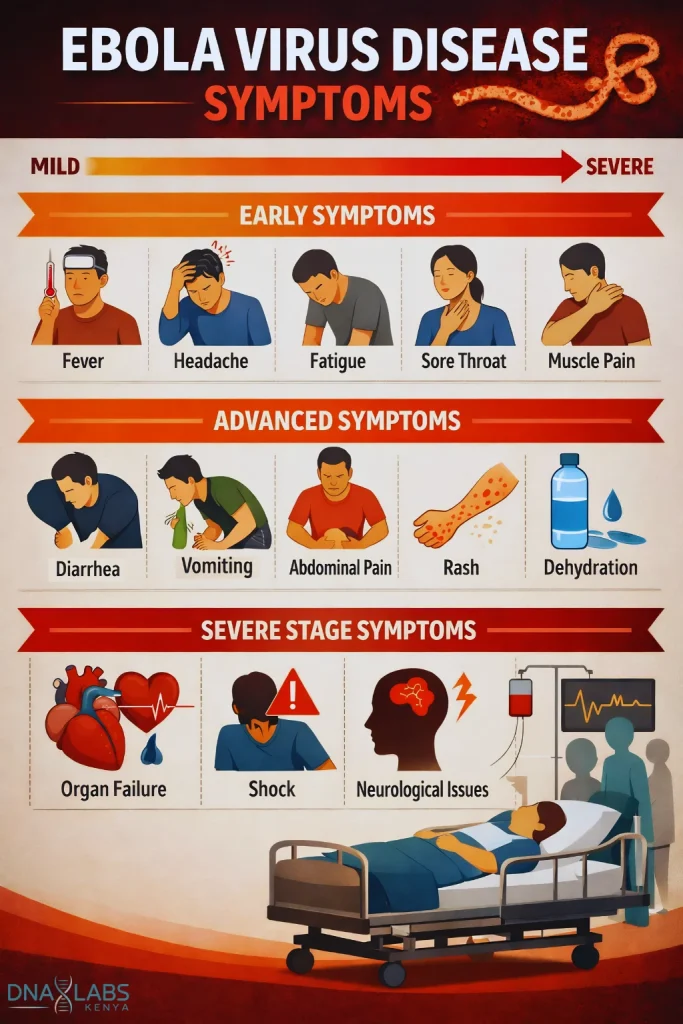
Symptoms of Ebola Virus Disease
Symptoms typically appear between 2 and 21 days after exposure.
Early Symptoms
Early signs resemble common illnesses such as malaria or flu:
- Fever
- Headache
- Muscle pain
- Fatigue
- Sore throat
Advanced Symptoms
As the disease progresses, symptoms become severe:
- Persistent vomiting
- Severe diarrhea
- Abdominal pain
- Rash
- Dehydration
- Internal and external bleeding
Severe Stage Symptoms
In advanced cases:
- Organ failure
- Shock
- Neurological complications
- Multi-organ dysfunction
Early detection is crucial for survival.
Stages of Ebola Infection
Stage 1: Incubation Period
- 2–21 days after exposure
- No symptoms present
- Person is not yet contagious
Stage 2: Early Infection
- Fever and fatigue begin
- Flu-like symptoms appear
Stage 3: Gastrointestinal Phase
- Vomiting and diarrhea
- Severe fluid loss and weakness
Stage 4: Critical Phase
- Bleeding may occur
- Organ failure risk increases
Stage 5: Recovery or Death
- Survivors may experience long-term fatigue and complications
- Severe cases may result in death without treatment
Diagnosis of Ebola Virus
Doctors diagnose Ebola based on symptoms, exposure history, and laboratory testing.
Diagnostic Methods
- Ebola Virus RNA Detection Qualitative Test
- Ebola Virus Viral Load Quantitative Test
- Blood tests for organ function
- Antigen detection during outbreaks
- Monitoring platelet and white blood cell counts
Early diagnosis helps prevent spread and improves survival chances.
Ebola Virus Treatment Options
There is no single universal cure for Ebola, but modern treatment significantly improves survival.
Supportive Care
- Intravenous fluids
- Electrolyte replacement
- Oxygen support
- Blood pressure management
- Pain and fever control
Antiviral and Antibody Therapies
Some approved treatments target specific Ebola strains and help reduce mortality when administered early.
Survival Factors
Survival depends on:
- Early treatment
- Strong immune response
- Access to healthcare facilities
- Virus strain type
Prevention of Ebola Virus Infection
Prevention is the most effective strategy against Ebola outbreaks.
Personal Protection Measures
- Frequent handwashing with soap
- Use of alcohol-based sanitizers
- Avoiding contact with infected individuals
Healthcare Safety Measures
- Use of protective clothing (gloves, masks, gowns)
- Sterilization of medical equipment
- Safe handling of infected patients
Community Prevention
- Safe burial practices
- Avoiding contact with wildlife
- Public awareness campaigns
- Contact tracing during outbreaks
Ebola Vaccines and Medical Advances
Vaccination has become a major breakthrough in controlling Ebola outbreaks.
rVSV-ZEBOV Vaccine
This vaccine is highly effective against the Zaire strain of Ebola virus and is used in outbreak regions.
Vaccination Strategy
- Ring vaccination (vaccinating contacts of infected individuals)
- Frontline healthcare worker immunization
- Emergency outbreak containment
Ongoing Research
Scientists are developing:
- Multi-strain vaccines
- Faster diagnostic tools
- Improved antiviral medications
- Long-term survivor treatments
Ebola Outbreaks and Global Impact
Major Outbreaks
The most significant outbreak occurred in West Africa between 2014 and 2016, affecting:
- Guinea
- Liberia
- Sierra Leone
This outbreak resulted in thousands of deaths and overwhelmed healthcare systems.
Impact on Society
Ebola outbreaks affect more than health:
- Economic disruption
- Travel restrictions
- Strain on healthcare systems
- Education interruptions
International organizations such as the World Health Organization, CDC, and Médecins Sans Frontières play key roles in outbreak response.
Latest Ebola Awareness and Global Response
Global health agencies continuously monitor Ebola outbreaks to prevent international spread. Rapid response teams are deployed during emergencies to:
- Isolate cases
- Conduct contact tracing
- Provide vaccination campaigns
- Educate local communities
Early response is critical in preventing large-scale epidemics.
Myths vs Facts About Ebola Virus
Myth 1: Ebola spreads through air
Fact: It spreads only through direct contact with bodily fluids.
Myth 2: Ebola always causes death
Fact: Many patients recover with proper care.
Myth 3: Mosquitoes spread Ebola
Fact: No evidence supports mosquito transmission.
Myth 4: Only Africa is affected
Fact: Outbreaks are mainly in Africa but could spread globally through travel.
Myth 5: Traditional remedies can cure Ebola
Fact: Only medical treatment and supportive care are effective.
Importance of Public Awareness
Public awareness is essential for controlling Ebola outbreaks. Education helps:
- Reduce misinformation
- Promote early medical care
- Encourage safe hygiene practices
- Improve community cooperation
Awareness campaigns save lives by ensuring people recognize symptoms early and seek treatment quickly.
Frequently Asked Questions (FAQ)
1. What is Ebola virus disease?
It is a severe viral infection that causes hemorrhagic fever and can be fatal without treatment.
2. How does Ebola spread?
Through direct contact with infected bodily fluids or contaminated objects.
3. Is Ebola airborne?
No, it is not airborne.
4. What are early symptoms of Ebola?
Fever, fatigue, muscle pain, and sore throat.
5. Is there a vaccine for Ebola?
Yes, vaccines exist for certain strains like Zaire Ebola virus.
6. Can Ebola be cured?
There is no complete cure, but treatment improves survival.
7. How deadly is Ebola?
Fatality rates vary from 25% to 90% depending on treatment access.
8. Who is most at risk?
Healthcare workers, caregivers, and people in outbreak regions.
Conclusion
Ebola Virus Disease remains one of the most dangerous infectious diseases in the world, but it is also one of the most preventable when proper medical systems and awareness are in place.
With improved vaccines, better diagnostic tools, and global cooperation, Ebola outbreaks can be controlled more effectively than ever before. However, continued public education remains essential.
Call to Action
Stay informed. Share accurate health information. Support public health education and disease prevention initiatives in your community. By promoting awareness and science-based prevention, we can help reduce the impact of Ebola outbreaks and protect lives worldwide.